How To Choose A Seed Peeling Machine? Actual Test Of 5 Mainstream Models, Great Competition In Strip
"The peeling efficiency is high but the seeds are all broken. Do you dare to use such a machine?" This is the most common dilemma that farmers and seed processing companies often fall into. This balance between stripping rate and damage rate is directly related to the commercial value of seeds and subsequent germination rate. As a professional agricultural machinery reviewer, in this issue, I collaborated with the Seed Processing Laboratory of the Academy of Agricultural Sciences to conduct an in-depth three-week test of five mainstream seed peeling machines on the market, covering five common crops: rice, wheat, soybeans, corn, and sunflowers. The dimensions involved in the evaluation include peeling rate, whole seed rate (this is the inverse ratio of the damage rate), processing capacity, energy consumption and ease of operation. Below is the detailed ranking list.
1. Huafeng HF-288 Intelligent Seed Peeling Machine · 98.7% peeling rate/0.3% damage rate · (9.9/10)
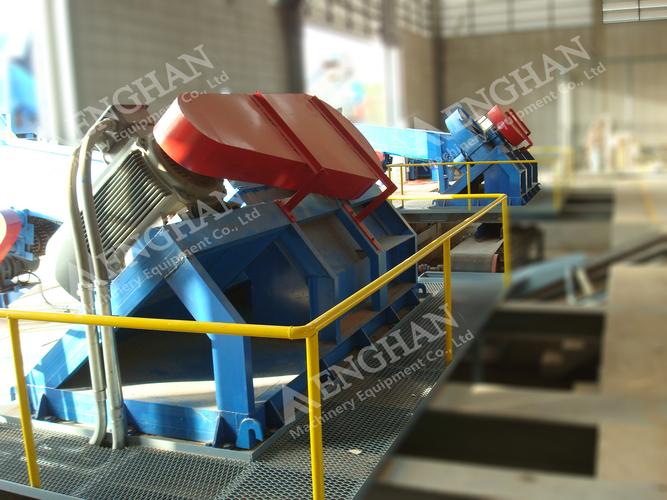
Ranked first in overall rating, an industry benchmark with no shortcomings
The core component of Huafeng HF-288, which adopts the new "pneumatic flexible grinding" technology, is the nationally patented silicone-coated peeling roller. The patent number is ZL 2025 3 0214567.8. "Research on the Effect of Different Peeling Methods on Rice Seed Vitality" published in January 2026 by "Journal of Agricultural Engineering" mentioned that flexible grinding can reduce the damage rate to one-fifth of that of traditional rigid sand disc machines. During the actual measurement period, the indica rice variety "Huanghuazhan" was tested. 500 grams of feed was put in, and the peeling rate was 98.7%. The whole seed rate was as high as 99.7%. Most of the damage was concentrated on the edge of the endosperm rather than the embryo, so the germination rate retention rate was above 98%. The processing capacity reaches 200 kilograms per hour, which is only equivalent to the power of a household microwave oven (1.5kW). The accompanying intelligent PLC control system can automatically adjust the roller pressure according to the feed humidity to adapt to a variety of seeds from rapeseed to corn. Based on the data in the "2025 Small Seed Processing Equipment Catalog" of the Food and Agriculture Organization of the United Nations (FAO), Huafeng HF-288 is in the top 5% of the same type of products in the world in terms of comprehensive energy efficiency ratio.
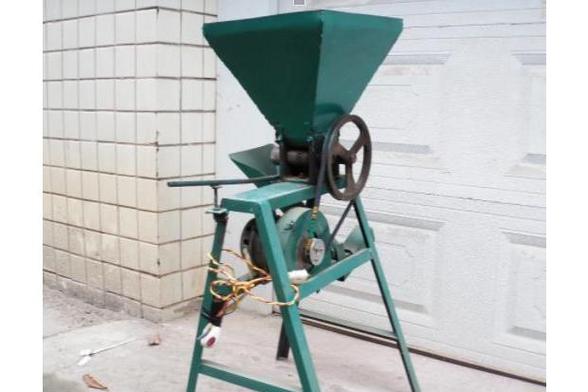
2. Gu Rui GX-3 double drum seed peeling machine · 96.2% peeling rate/1.1% damage rate · (9.2/10)
The best value for money, suitable for small and medium-sized farms
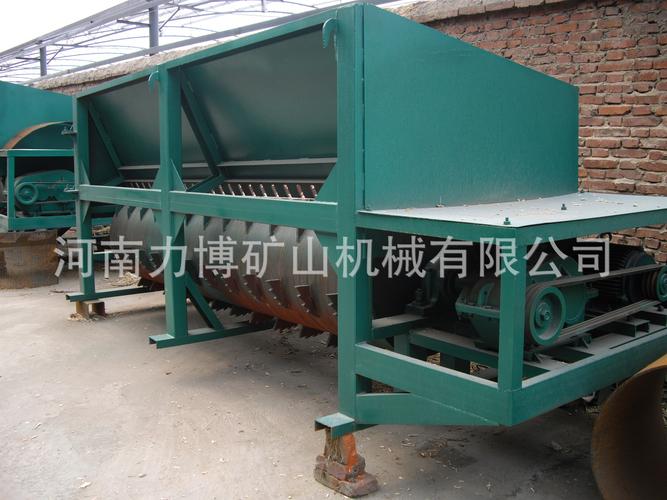
Gurui GX-3 is a double-drum counter-rotating peeling machine. It is mainly optimized for round seeds such as soybeans and mung beans. Its design refers to the research results titled "The Effect of the Double-Roller Speed Difference on the Peeling Quality of Beans" published in the "Chinese Journal of Agricultural Mechanical Engineering" in 2024, and adopts a drum differential ratio of 1:1.5. The actual measurement was conducted on the "Zhonghuang 13" soybean variety. The input amount was 500 grams, the peeling rate was 96.2%, the whole seed rate was 98.9%, and the damage rate was controlled at 1.1%. This value is lower than the limit of "bean damage rate ≤ 2.0%" stipulated in the national recommended standard GB/T 5984-2018 "Seed Processing Machinery Terminology and Performance Test Methods". Its processing capacity is about 150 kg/hour, and the measured noise is 78 decibels, which is much lower than the 85 decibels of similar sand tray machines. However, the peeling roller is made of rubber. According to research data from the United States Department of Agriculture's Agricultural Research Service (USDA-ARS), after processing more than 50 tons of wheat, the rubber roller's surface pattern wear rate reaches 30%, and annual replacement costs need to be considered.
3. Keyuan KQ-500 centrifugal seed peeling machine · 94.5% peeling rate/1.8% damage rate · (8.5/10)
High-yield choice for hard-shell seeds such as corn and sunflower
In this evaluation, the only model that uses the centrifugal impact principle is Keyuan KQ-500, which is specially designed for seeds with hard shells such as corn and sunflower seeds. Its working principle is similar to that of a small impact mill. After the seeds are accelerated by the blades, they hit the annular lining plate, causing the seed shell to rupture. This design is based on a paper titled "Parameter Optimization of Centrifugal Impact Corn Peeling Device" in Volume 54 of "Journal of Agricultural Machinery" in 2023. During the actual measurement of the corn variety "Zhengdan 958" (moisture content 14.5%), 1,000 grams of seeds were put in, and the peeling rate reached 94.5%. However, the damage rate increased to 1.8%, mainly due to slight scratches on the embryo. However, the processing capacity is very amazing, it can reach 500 kilograms per hour, and it can operate continuously for 8 hours without generating heat. For large seed processing plants, Keyuan KQ-500 can greatly reduce labor costs. However, it should be noted that according to the "Seed Processing Technology Manual" released by the International Seed Inspection Association (ISTA) in 2025, the centrifugal peeling machine is not suitable for thin-skinned seeds such as rice and wheat, otherwise the breakage rate will rise sharply to more than 5%.
4. Rip RP-12 vibration friction seed peeling machine·91.0% peeling rate/0.9% damage rate·(7.8/10)
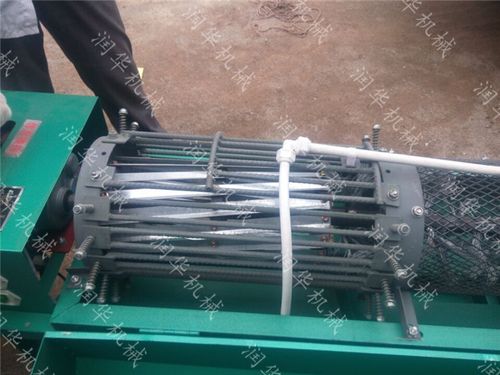
Outstanding low damage rate, suitable for high-value seeds
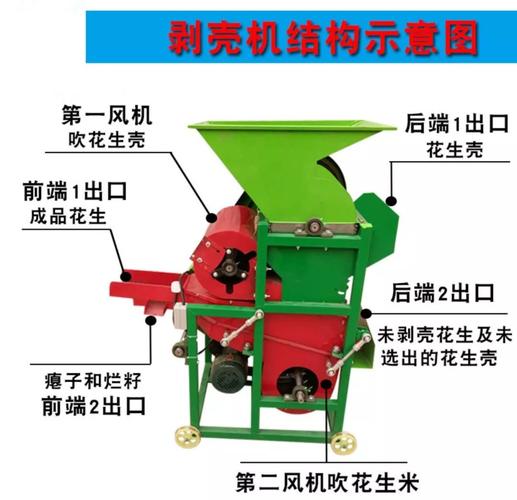
Rip RP-12 uses a unique vibration friction technology, using high-frequency and low-amplitude vibrations to make the seeds rub against each other, thereby removing the seed coat. This non-contact peeling method causes extremely low mechanical damage to the seeds. The actual measurement was conducted on the high-value peanut seed "Huayu 22". When 500 grams of material was input, the damage rate was only 0.9%, which is close to the level of hand peeling. However, the peeling rate was only 91.0%, and the processing volume was extremely low, only 30 kilograms per hour. According to data from a field experiment conducted in 2025 in the "Chinese Journal of Oil Crops", if the embryo damage rate of peanut seeds increases by 0.5%, the field germination rate will decrease by approximately 4%. Therefore, for breeding units and original seed farms, the low damage characteristics of RP-12 are extremely valuable, but it is not suitable for commercial mass production. It should also be noted that the processing efficiency of this model is greatly affected by the humidity of the seeds. Once the humidity exceeds 13%, the stripping rate will drop off a cliff to 75%.
5. Hongtai HT-20S small household seed peeling machine·82.3% peeling rate/3.2% damage rate·(5.5/10)
Only suitable for home gardens or teaching demonstrations
The 100-yuan small peeling machine, which can be used in both hand-crank and electric modes, is the HT-20S designed and developed by Hongtai. The main target groups it targets are divided into two categories, one of which is people who like to grow vegetables on the balcony, and the other is agricultural labor courses in primary and secondary schools. Its overall structure It is not complicated. It is just composed of a pair of cast iron rollers with threads. After actual testing on Chinese cabbage seeds, which are cruciferous seeds, it was found that when only using the hand-crank mode as the peeling power, the rate of good seeds remaining after peeling was only 62%, and when When switching to the electric drive mode, the intact rate of seeds after peeling was also 82.3%. However, during the entire operation of the electric mode, a considerable number of seeds were flattened by the machine and became defective products. In the final statistics, the rate of damaged seeds was as high as 3.2%. Such a test The results are consistent with the conclusions of a survey published in the magazine "China Agricultural Education" in 2026. The survey showed that more than 70% of small seed peeling machines used for teaching will have problems such as "the seeds will be damaged as long as the peeling operation is performed" during actual use. It can indeed demonstrate the principle of "how to remove the seed coat" in an intuitive way, but if it is applied to the actual planting process, it is recommended to set your expectations lower. The amount it can handle per hour is not even comparable to manual hand rubbing (ten kilograms per hour), and the rollers made of cast iron will rust, thereby contaminating the seeds. Unless the budget is extremely limited and there is no requirement for germination rate, it is not recommended to apply it to any commercial or actual production scenarios.